
What Is Custom Cabinetry?
Custom cabinetry is designed and manufactured according to specific project requirements rather than fixed standard dimensions.
Depending on the project, customization may include:
- Cabinet dimensions
- Layout and configuration
- Door styles
- Colors and finishes
- Internal storage
- Hardware
- Lighting
- Material combinations
- Decorative details
This approach gives architects and interior designers greater flexibility when translating a design concept into a finished interior.
Why Custom Cabinets Matter in High-End Residential Projects
-
Better Adaptation to the Space
Every residential project has different dimensions and architectural conditions. Standard cabinets may leave unused areas or require compromises in layout.
Custom cabinets can be designed according to actual measurements, helping the cabinetry integrate more naturally with walls, ceilings, doors, windows, and other architectural elements.
-
Greater Material Flexibility
High-end projects often involve multiple materials.
Wood veneer, lacquer, leather, metal, glass, stone, and other decorative finishes can be incorporated into a coordinated cabinetry system. Material combinations can then be adjusted according to the overall interior design concept.
-
Consistent Design Throughout the Home
Instead of treating the kitchen, wardrobe, living room, and bedroom as completely separate products, whole-house custom cabinetry allows these spaces to share a consistent design language.
Colors, materials, proportions, handles, lighting, and decorative details can be coordinated across different rooms.
Main Areas for Whole-House Custom Cabinetry
-
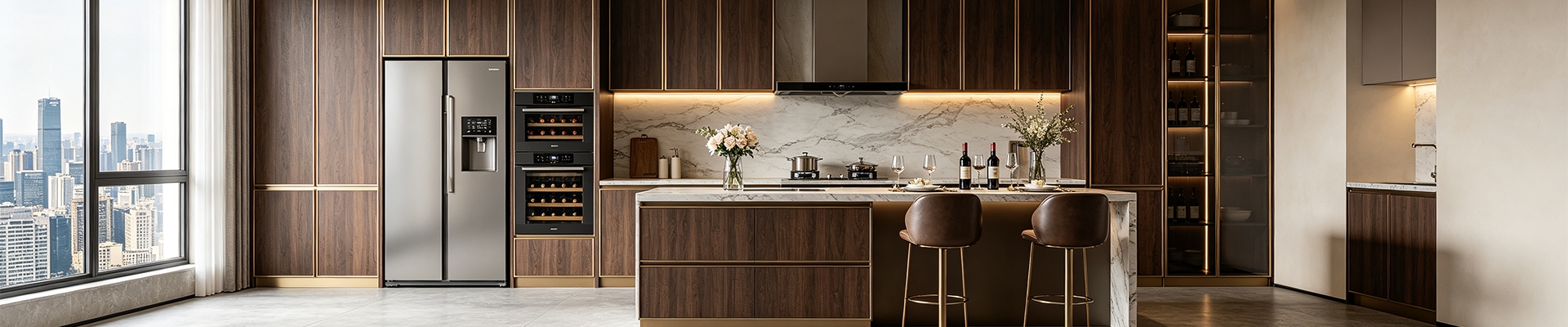
Kitchen
Custom kitchen cabinets can be planned according to cooking habits, appliances, storage requirements, available dimensions, and the overall interior style.
-
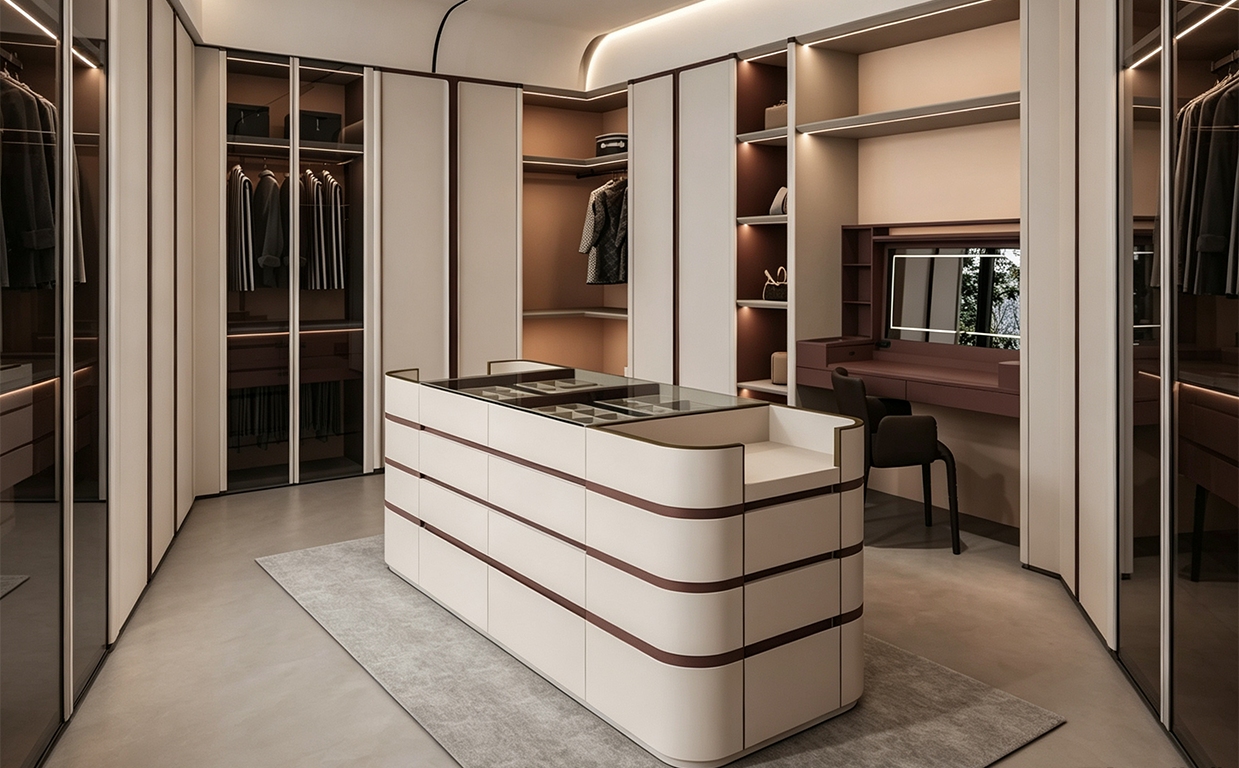
Wardrobe and Walk-In Closet
Wardrobe systems can incorporate hanging areas, drawers, shelves, accessory storage, lighting, and other personalized configurations.
-
Living Room
TV cabinets, display cabinets, wall storage, and decorative cabinetry can be integrated with the architectural design of the living space.
-
Bedroom
Bedside storage, wardrobes, dressing tables, and other furniture elements can be developed as part of a unified bedroom solution.
-
Wine and Display Storage
For premium residential projects, customized wine cabinets and display systems can provide both storage functionality and decorative value.
-
From Design Drawings to Production
A successful custom cabinetry project usually requires close coordination between the client, designer, contractor, and manufacturer.
A typical process may include:
- Project requirement discussion
- Drawing and dimension review
- Material and finish selection
- Technical development
- Sample or finish confirmation
- Production
- Quality inspection
- Packaging and shipment
- Installation coordination
Clear communication during the early stages can reduce misunderstandings later in the project.
What Information Should Buyers Provide?
To evaluate a custom cabinetry project efficiently, manufacturers typically need sufficient project information.
Useful information may include floor plans, cabinet drawings, dimensions, reference images, preferred materials, colors, quantities, destination country, project schedule, and special technical requirements.
The more complete the project information is, the easier it becomes to evaluate feasibility, production requirements, lead time, and quotation details.
Custom Cabinet Manufacturing for Overseas Projects
International projects introduce additional considerations beyond product design.
Packaging, transportation, documentation, installation coordination, replacement components, and communication across different project stages can all influence the final result.
For this reason, B2B buyers should consider not only the appearance of the cabinetry but also the manufacturer's ability to support customized overseas projects.
Conclusion
Custom cabinetry provides architects, designers, developers, and contractors with greater flexibility when creating high-end residential interiors.
By coordinating dimensions, materials, finishes, storage systems, and manufacturing requirements from the beginning, custom cabinetry can become an integrated part of the overall interior rather than simply a collection of individual storage products.