
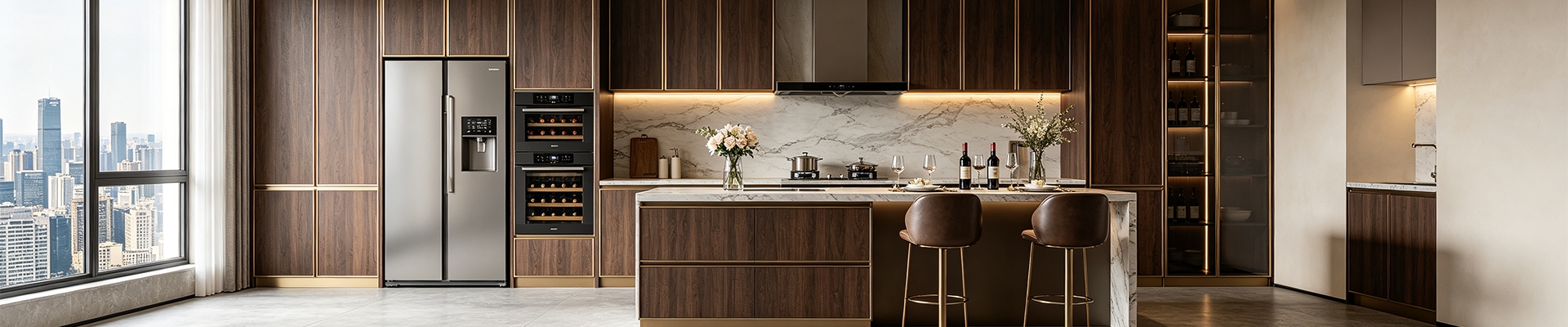
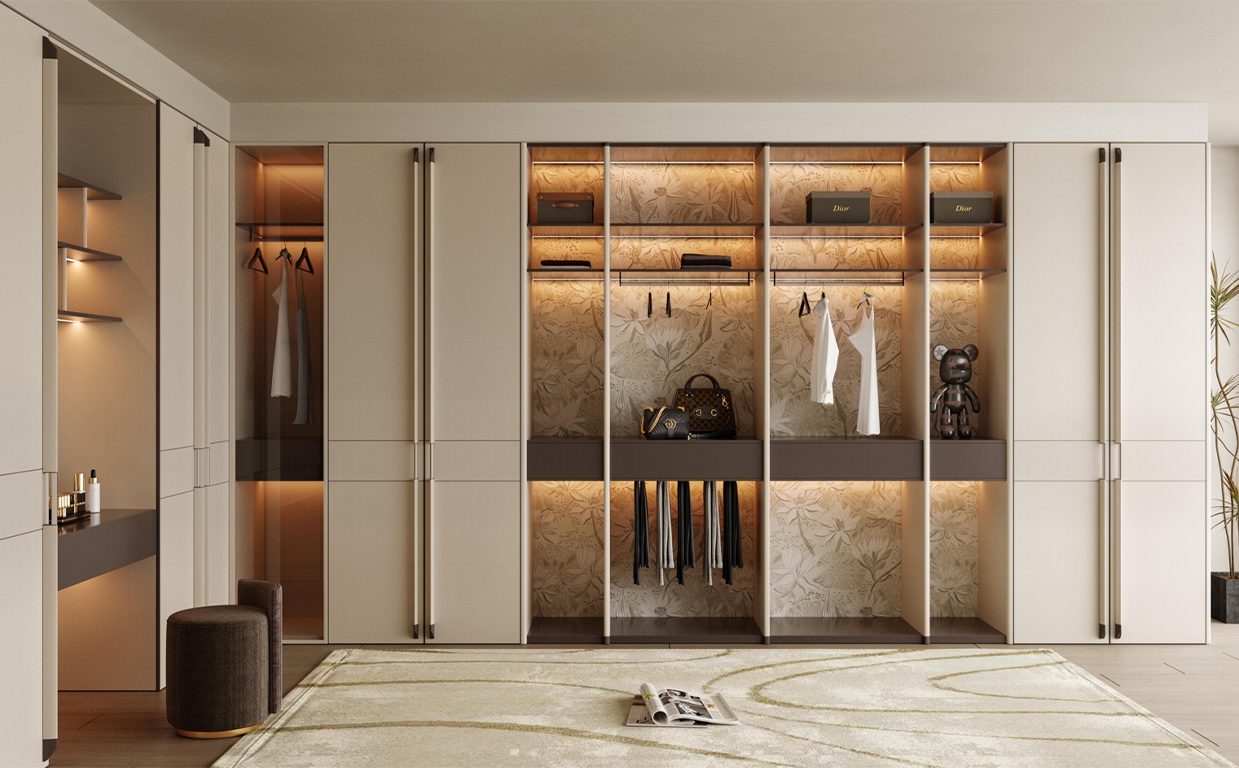
Choosing a custom cabinet manufacturer is an important decision for interior designers, contractors, developers, distributors, and other B2B buyers.
For project-based cabinetry, buyers are not simply purchasing finished cabinets. They may also need support with drawings, materials, customization, production, quality control, packaging, shipping, and installation coordination.
Therefore, evaluating a manufacturer requires more than comparing prices.
1. Evaluate Customization Capabilities
The first question is whether the manufacturer can actually support the level of customization required by your project.
Depending on the project, customization may involve:
- Dimensions
- Cabinet structures
- Door designs
- Materials
- Colors
- Finishes
- Hardware
- Internal storage systems
- Lighting
- Decorative details
For projects involving villas, apartments, hotels, or other customized interiors, flexibility can be particularly important.
2. Review Material Options
Materials have a significant influence on both appearance and performance.
A custom cabinet manufacturer may work with combinations of wood, veneer, lacquer, leather, metal, glass, stone, and other decorative surfaces.
B2B buyers should understand what materials and finishes are available and whether samples can be provided before mass production.
For special products such as leather cabinets, it is also important to discuss leather texture, color, application areas, edge details, stitching, and combinations with other materials.
3. Check Manufacturing Capabilities
Design is only the first stage. The manufacturer must also be able to translate drawings into consistent finished products.
Buyers can evaluate the supplier's production equipment, manufacturing processes, technical team, production capacity, and experience with customized projects.
For larger projects, production planning and consistency across multiple cabinet units are especially important.
4. Understand the Quality Control Process
Quality control should cover more than the final inspection.
Depending on the product and project, inspection may involve incoming materials, dimensions, surface finishes, hardware installation, assembly, functionality, packaging, and final appearance.
Before placing an order, B2B buyers can ask the manufacturer to explain how quality is controlled throughout production.
5. Discuss Drawings and Technical Details Early
Custom cabinetry depends heavily on accurate technical information.
Floor plans, elevations, cabinet drawings, dimensions, appliance specifications, material requirements, and installation conditions should be discussed before production.
Identifying potential technical issues during the drawing stage is generally more efficient than making changes after manufacturing has started.
6. Consider Packaging and International Shipping
For overseas projects, packaging is an important part of the supply process.
Cabinet components may travel long distances and pass through multiple handling stages before reaching the project site.
Buyers should therefore discuss packaging methods, labeling, loading plans, shipping documentation, and other export requirements with the supplier.
7. Evaluate Project Communication
Customized projects usually involve multiple rounds of confirmation.
The supplier may need to communicate with purchasing teams, designers, contractors, or project managers regarding drawings, materials, samples, production progress, and shipment.
Clear communication and an organized confirmation process can make complex projects easier to manage.
8. Ask About OEM and ODM Capabilities
For distributors, brands, and other long-term B2B partners, OEM and ODM capabilities may also be relevant.
Depending on the cooperation model, manufacturers may support customized specifications, finishes, packaging, product development, or other private-label requirements.
Buyers should discuss these requirements before quotation so that the manufacturer can evaluate the project correctly.
Questions to Ask Before Requesting a Quotation
Before selecting a custom cabinet supplier, consider asking:
- What types of custom cabinets do you manufacture?
- What materials and finishes are available?
- Can you manufacture according to architectural or shop drawings?
- Can material samples be provided?
- What is the typical production process?
- How is quality controlled?
- What information is required for quotation?
- How are products packaged for international shipping?
- Can you support OEM or ODM projects?
- What support is available for overseas projects?
These questions can help buyers compare suppliers based on project requirements rather than price alone.
Conclusion
Selecting a custom cabinet manufacturer requires a balanced evaluation of design flexibility, manufacturing capability, materials, quality control, project communication, and international supply experience.
For architects, designers, contractors, developers, and distributors, providing clear project information at the beginning can also make supplier evaluation and quotation more efficient.
If you are planning a custom cabinetry project, prepare your drawings, dimensions, preferred materials, quantities, and project schedule before contacting potential manufacturers. This will help both sides evaluate the project more accurately.